


My Memorial Hermann™
4.3278.00 Reviews
App Specs
- Version
- 11.7.2
- Updated On
- License
- Free
- Downloads
- 100,000+
- Developer
- Memorial Hermann Health System
- Categories
- Medical
- Platform
- Android
Screenshots
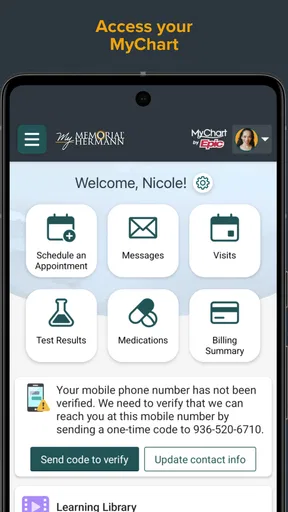
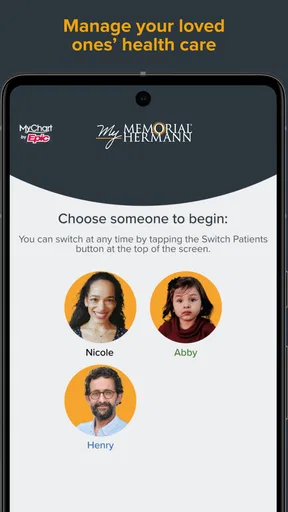
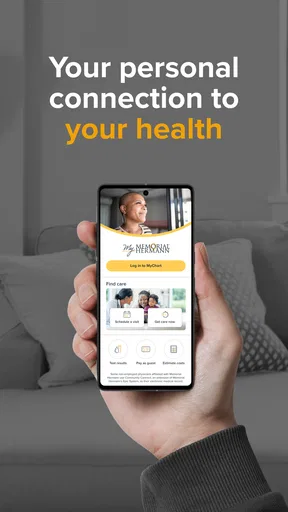
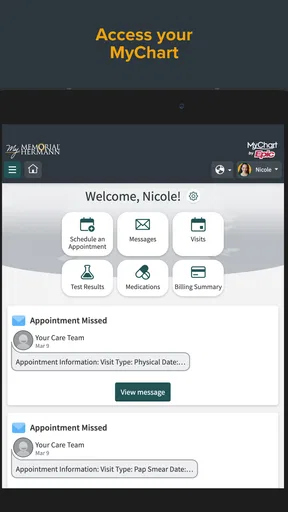
 Analysis by AppCompare
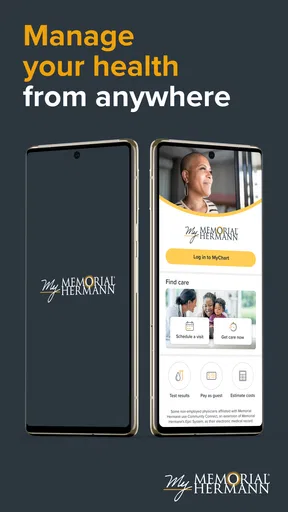
Managing healthcare on a shared household device sounds simple until one person’s appointment reminders, test results, and messages sit beside another person’s private medical information. My Memorial Hermann™ is designed for that everyday reality through a combination of My Memorial Hermann and MyChart services. I found it most useful as a personal health-management tool that can also fit into a family’s routine, provided each adult treats account access carefully.
This is a free medical app from Memorial Hermann Health System, available for Everyone and built for devices running iOS 11 or later. It has passed the point of being a niche download, with over 100K installs, a 4.3 average from more than 500 ratings, and over 200 written reviews. The current version is 11.7.2. Those figures suggest a reasonably established patient audience, although popularity should not be confused with a replacement for urgent medical care.
How My Memorial Hermann fits into a real household
When I think about this app in a household, I focus less on sharing one screen and more on making a patient’s next practical step easier to coordinate. A calm check-in can help turn a health detail into a ride, a calendar reminder, or a question to bring up later, while keeping the patient in charge of what gets shared. That distinction is useful when several people want to help but only one person owns the account.
A shared tablet is convenient, but the account should not be shared
A realistic use case is a household tablet kept in the kitchen. One person wants to check an upcoming visit, another needs to review a message from a care team, and a parent may want to help an older relative keep track of health tasks. Having one device available can make healthcare administration less scattered than searching through paper reminders, email threads, and separate browser tabs.
The important distinction is between a shared device and a shared account. I would be comfortable using the same tablet for different household members only if each person signs in to their own account and signs out when finished. I would not treat the app as a communal family dashboard. Medical information belongs to the individual, even when the phone or tablet belongs to the household.
That boundary is especially important when a device is left unlocked. A notification, open session, or saved login can expose information to the next person who picks up the device. The app can make access more convenient, but convenience should not become a reason to leave a personal health account available to everyone at home.
Setting it up without confusing household roles
My first recommendation is to install and test the app on the device that will actually be used for health tasks, rather than assuming a shared family phone is automatically the best choice. A personal phone is usually better for private communication. A household tablet may be more practical for someone who has difficulty reading a small screen, but it needs a clear sign-in routine.
Worth Reading Before You Choose

EA SPORTS FC Mobile 26 Is a Bigger Football Game, but It Takes Time

Flipboard Shows What News Apps Must Do Beyond the Feed

Switching to Android Auto Means Rethinking Your Driving Routine

Google Calendar Makes a Crowded Week Easier to Manage

Ludo King Makes the Most of the Minutes Between Plans

Baby Panda World Brings Quick Play to Modern Phones, but Its Game Library Feels Busy
During setup, I would keep each adult’s credentials separate and avoid writing passwords on a note beside the device. If another person is helping with technology, that does not automatically mean they should have unrestricted access to the account. Assistance can mean opening the app, helping navigate, or sitting nearby while the account holder reads and decides what to do.
There is also a useful difference between helping someone use their account and acting on their behalf. A spouse, adult child, or caregiver may coordinate appointments in conversation, but the account itself still represents the patient. I would confirm whose name is displayed before reading a message, reviewing a result, or starting any account task. That small pause prevents the most avoidable household mistake: assuming the last person’s session is still the right one.
Using the app as a coordination aid, not a family command center
The strongest household value is coordination around the patient’s own information. For example, one person can check a scheduled visit while another writes the date on a shared calendar, prepares transportation, or remembers to arrange time away from work. The app can be the place where the relevant health detail is checked, while the family’s regular calendar remains the place for shared logistics.
I prefer this division because it keeps medical information limited to the people who need it. A calendar entry might say that someone has a medical appointment without including sensitive details. The patient can decide what the household needs to know, rather than copying every clinical message into a group chat or shared notes app.
For a caregiver helping an older family member, the practical workflow is to sit together, let the patient remain in control of the account, and write down only the agreed next steps. That could include the appointment time, a question to ask, or a reminder to contact the appropriate office. The app supports access to the patient’s health-management process; it does not remove the need for conversation and consent within the family.
I also found that digital coordination works best when it happens at a calm moment. Checking an account while rushing out the door makes it easier to misread a date or forget which person is signed in. A short routine—open the app, verify the account identity, review the relevant item, then close the session—feels more reliable than repeatedly leaving it open in the background.
Age context and the role of trust
The Everyone age rating makes the app broadly suitable from a store-classification perspective, but that does not mean every user should navigate it alone. Medical information can be difficult to interpret, and younger users may need an adult to explain what they are seeing. Older users may need practical help with typing, reading, or remembering account steps. In both cases, support should be based on trust and the patient’s wishes.
I would be particularly careful with a child’s or teenager’s information on a family device. A parent may be responsible for helping with healthcare, but the household should still avoid casually opening the account in front of siblings or visitors. The age rating describes who can use the app; it does not turn private health details into shared family content.
The same principle applies to an older relative. If an adult child handles technology, I think the healthiest arrangement is transparent assistance: explain what screen is open, let the account holder decide what to share, and avoid making medical decisions simply because the helper is more comfortable with the app. Digital access should strengthen the patient’s participation rather than quietly replace it.
Trust also matters between partners. A shared household does not mean unlimited access to each other’s medical records. I would never use a partner’s logged-in session just because the tablet was available. If coordination is necessary, the patient can show the relevant information or handle the account while the other person helps with practical arrangements.
What the app is good at in day-to-day use
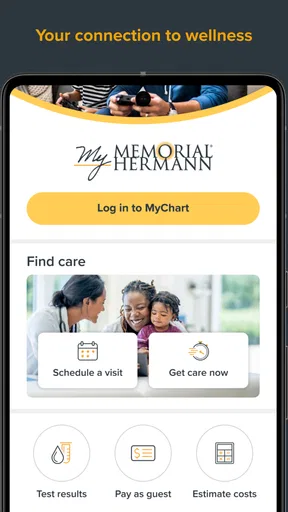
The combination of My Memorial Hermann and MyChart gives the app a clear purpose: keeping health-management tasks together instead of making the patient rely entirely on phone calls, paper documents, or a general notes app. I see the greatest value for people already receiving care through Memorial Hermann and wanting a central digital route for routine account activity.
It is also useful for people who like to prepare before contacting a healthcare office. Rather than calling with only a vague recollection, a user can first review the information available in their account and then make a more focused decision about what needs attention. That can make a conversation with a clinic more efficient, although the app itself should not be treated as a diagnostic tool.
For a busy household, the app can reduce the number of separate places where appointment-related information is tracked. A patient can check the account, tell the family what is relevant, and add the practical details to the household’s normal planning system. That is a modest workflow improvement, but it is more dependable than expecting everyone to remember a conversation.
Another non-obvious benefit is separation of responsibilities. The patient can use the app for personal medical information, while a partner or caregiver handles transportation, childcare, or calendar planning outside it. This avoids turning the healthcare account into a shared project-management space and keeps the app focused on the person receiving care.
Where it feels less convenient
The biggest limitation is that its usefulness depends on the relationship between the patient and Memorial Hermann. If your care is spread across unrelated health systems, this app cannot become a universal record for everything. You may still need other patient portals, pharmacy tools, insurer services, or paper instructions. In that situation, a general health organizer may be better for an overall household view, while this app remains relevant for Memorial Hermann-related tasks.
A second limitation is the tension between quick access and privacy. A person who wants the app to open instantly may be tempted to keep a session active on a shared device. That makes the experience easier in the moment but creates an unnecessary privacy risk. I consider the sign-in and sign-out habit part of using the app responsibly, not an optional extra.
Household coordination can also become awkward if several people assume they are entitled to the same information. The app cannot settle family disagreements about who should know what. That requires a clear conversation with the patient and, where appropriate, guidance from the healthcare organization. The software can organize access to an account; it cannot define every family boundary.
I would also avoid relying on any patient portal for emergencies. If someone has severe or rapidly worsening symptoms, the right response is immediate medical help, not waiting for an app screen or message workflow. My Memorial Hermann is best viewed as a tool for routine management and communication, not as an emergency response channel.
My practical routine for a shared device
If I were setting this up for a household, I would begin with one account holder at a time. After opening the app, I would check the displayed identity before doing anything else. I would review only the needed item, avoid leaving sensitive screens visible, and sign out before handing the device to someone else.
For a caregiver, I would keep a separate household note containing only logistical information that the patient has agreed to share. Appointment timing and transport needs may belong there; detailed medical content usually does not. This creates a useful buffer between private health records and the family’s everyday planning.
I would also use a simple verbal handoff: “Your account is open,” “I am finished,” or “Please sign in now.” That may sound overly cautious, but it removes ambiguity when several people use one tablet. It is especially helpful in homes where an older adult or teenager may not notice whose session is active.
Finally, I would keep the app updated through the normal device process and make sure the operating system meets the stated minimum of iOS 11 or later. Compatibility is easy to overlook when an older household tablet is being reused. Checking that before building a family routine around the app prevents an avoidable setup problem.
Who should choose it, and who should look elsewhere
I recommend My Memorial Hermann to patients who use Memorial Hermann services and want a dedicated place for their health-management activity. It is a sensible choice for someone who prefers digital access, wants to reduce paper dependence, or needs a practical way to check information before coordinating with family members.
It is also a good fit for a trusted helper who supports a patient without taking over the patient’s identity. The best experience comes when the account holder remains involved and the household uses the app as a source for accurate details, not as a substitute for discussing responsibilities.
I would suggest a different primary tool for someone who wants one complete record across many unrelated providers. A general health organizer may be more suitable for combining information from different systems, even if it cannot replace the official Memorial Hermann account for organization-specific tasks. Likewise, people who rarely use Memorial Hermann services may gain little from adding another medical app.
People who dislike account management or regularly use public or shared devices should think carefully before relying on it. The app can still be worthwhile, but only if they are willing to protect the session and keep credentials private. If that feels unrealistic, using a personal device or handling routine matters through the healthcare organization’s other available channels may be safer and less frustrating.
My household verdict
My Memorial Hermann is a focused medical app rather than a broad family-management platform. I like its place in a household routine because it can provide the patient’s own information while leaving shared planning to calendars, conversations, and agreed reminders. That separation is its quiet strength: it supports coordination without requiring the whole family to enter the same account.
My final recommendation is positive for Memorial Hermann patients, with one condition: treat every login as personal, even when the device is shared. If the patient stays in control, caregivers offer transparent help, and the family avoids copying private details into communal spaces, the app can make routine health administration easier. If what you need is a single portal for every provider or an emergency-care solution, this is not the right tool. For its intended role, however, the most valuable feature is the balance between convenient access and patient ownership.
As a free app from Memorial Hermann Health System, it is easy to consider, and its established user base gives it a reasonable level of credibility. I would install it for a household member who receives care through Memorial Hermann, then build a simple privacy-first routine around it. That approach gets the practical benefit without turning a personal medical account into a shared household password.
Pros
- Easy access to appointments
- test results
- and medical records in one place.
- Secure messaging helps you communicate directly with your care team.
- Prescription refill requests can save time and reduce phone calls.
- Digital check-in and bill payment simplify routine hospital visits.
- Useful health tools support medication tracking and preventive care.
Cons
- Some features may only work for Memorial Hermann patients and locations.
- Account setup can require identity verification and detailed personal information.
- Appointment availability and services vary by department and facility.
- Notifications may become overwhelming if many reminders are enabled.
- Some users may experience slow loading or login issues after updates.
FAQs for My Memorial Hermann™
What is My Memorial Hermann™ used for?
My Memorial Hermann™ is the official mobile app for managing many Memorial Hermann healthcare services in one place. After signing in, users may be able to view appointments, communicate with care teams, review parts of their medical information, access test results, manage prescriptions, check bills, and find health resources. Available features can vary depending on your location, provider, account type, and the services connected to your Memorial Hermann record.
Do I need to be a Memorial Hermann patient to use the app?
Yes, the app is primarily designed for patients who receive care through Memorial Hermann and have access to an eligible online patient account. You will generally need to register or sign in with your Memorial Hermann credentials, and some functions may require identity verification. If you are a new patient, a caregiver, or are having trouble linking your records, the app’s support or registration options can explain the next steps.
Can I use My Memorial Hermann™ to schedule appointments and contact my doctor?
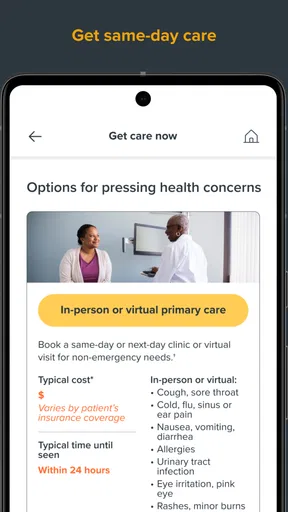
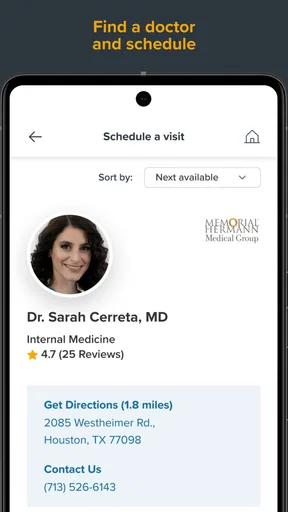
The app may allow you to view upcoming appointments, request or schedule certain types of visits, and send secure messages to participating providers. However, not every department, clinician, appointment type, or insurance-related service is necessarily available through the application. For urgent symptoms, appointment changes that cannot wait, or services not shown in the app, contacting the appropriate Memorial Hermann office directly may be faster.
Is My Memorial Hermann™ safe for viewing medical information?
My Memorial Hermann™ is intended to provide secure access to personal healthcare information through an authenticated account. You should protect your login details, use a strong device passcode, and avoid accessing the app on shared or public devices. Always sign out when appropriate and keep the application and operating system updated. The app is not a replacement for emergency care, and sensitive information should not be shared through unsecured channels.
Is My Memorial Hermann™ free, and what devices support it?
The application is generally available to download without a separate app purchase, although healthcare services, appointments, prescriptions, or other care may involve normal insurance charges or provider fees. It is designed for supported Android and iOS devices, but compatibility can depend on your operating system version and device settings. Before downloading, check the current Google Play or App Store listing for requirements, updates, and regional availability.


